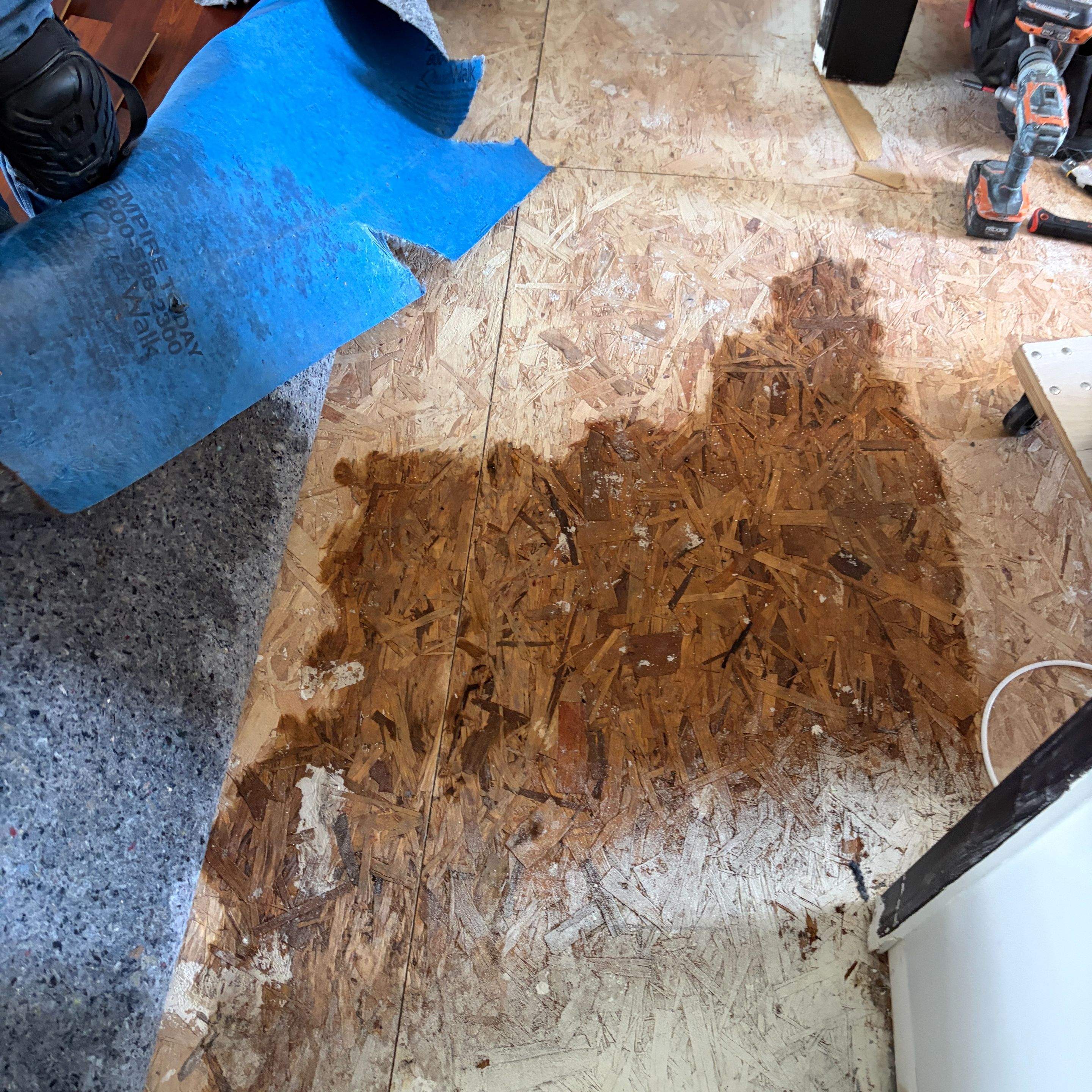
What Actually Happens in the First Hour of a Water Heater Leak
Before the comparison, you need to understand the physics of why these leaks escalate so quickly in Brookside homes. A standard 50 gallon tank under typical municipal pressure can release 6 to 10 gallons per minute when the tank itself fails. Even a slow drip from a pressure relief valve or supply connection delivers 20 to 40 gallons over a weekend you spend away. Water follows gravity, finds the lowest point, and saturates porous materials in this order: carpet pad, drywall paper, baseboards, subfloor, then insulation. Each layer holds moisture longer than the last.
Your first three moves matter more than anything you do later. Shut off the cold water supply valve at the top of the tank. Cut power at the breaker for electric units, or rotate the gas control to off for gas units. Then document everything with photos and video before you move a single item. Insurance adjusters in Central Indiana review timestamps, and the photographic record you build in the first hour determines how smoothly your claim moves. If standing water covers more than a small area, you need professional water extraction before drying can even begin, because residential wet vacs cannot pull moisture from the substrate.
One detail homeowners overlook is the temperature of the water itself. A leaking tank often discharges water at 120 degrees or higher, which accelerates damage to adhesives in laminate flooring, softens drywall joint compound faster than cold water intrusion, and creates the ideal warm humid environment for microbial growth to begin within 24 to 48 hours. Treat a hot water leak with more urgency than a cold supply line leak, even when the visible volume looks identical.
The Real Cost Picture: DIY Cleanup vs Professional Restoration
The table below reflects what Brookside Water Restoration sees across Brookside jobs. These are realistic ranges, not best case marketing numbers. Your actual figures depend on tank size, how long water sat, flooring type, and whether the leak reached finished space below.
| Cost Factor | DIY Cleanup Path | Professional Restoration Path |
|---|---|---|
| Water extraction (first 24 hours) | $0 to $150 (rental wet vac, towels, fans) | $400 to $900 (truck mount extraction, moisture mapping) |
| Structural drying (3 to 5 days) | $50 to $200 (box fans, household dehumidifier) | $800 to $2,400 (commercial air movers, LGR dehumidifiers, daily monitoring) |
| New water heater (tank, 40 to 50 gal) | $700 to $1,400 installed | $700 to $1,400 installed (coordinated with plumber) |
| Drywall and baseboard repair | $300 to $1,200 if you do it yourself | $600 to $2,800 with matched texture and paint |
| Flooring repair or replacement | $2 to $8 per sq ft materials only | $4 to $14 per sq ft installed |
| Mold remediation (if missed moisture) | $1,500 to $6,000 weeks later | Usually prevented by proper drying |
| Insurance claim acceptance rate | Lower, often disputed on documentation | Higher, IICRC moisture logs support claim |
| Total realistic range | $1,500 to $4,500 plus hidden mold risk | $3,200 to $9,800 with proven dry standard |
| Timeline to fully dry and restored | 2 to 6 weeks, often incomplete | 7 to 14 days, documented to dry standard |
Read the table carefully, because the headline number is not the real story. The DIY column looks cheaper until you account for the mold remediation row, which catches roughly one in three homeowners who skipped professional drying. The hidden cost of missed moisture is the single largest variable in any water heater leak. We have walked into Brookside basements eight months after a DIY cleanup where the homeowner spent $2,000 themselves and now faces a $7,000 mold job plus replacement of materials they thought they saved.
The professional path costs more upfront but produces a documented dry standard, typically a moisture content reading at or below 16 percent for wood substrates and equilibrium with unaffected baseline materials. That documentation matters when you sell the home, when you file the insurance claim, and when you want to sleep at night knowing the wall cavity behind your finished basement is not quietly growing Stachybotrys. Most homeowners insurance policies cover sudden and accidental water heater failure, which is exactly what a tank rupture or pressure relief release qualifies as. Gradual seepage that you ignored for months is a different conversation, and that distinction is why early professional response improves claim outcomes.
Another line worth studying is the timeline row. Two to six weeks of partial drying means weeks of elevated indoor humidity, which affects HVAC load, encourages dust mite populations, and can warp adjacent cabinetry that was never directly wet. The compressed 7 to 14 day professional timeline is not just faster, it is less disruptive to the rest of your home systems and to your daily routine.
What Drives Your Number Up or Down
Three factors swing your final cost more than anything else. First, location of the unit. A tank in an unfinished garage or utility closet limits damage to concrete and minor framing. A tank on a second floor or above finished living space multiplies costs by three to five times because gravity carries water into ceilings, light fixtures, and rooms below, similar to the cascade pattern we describe in our coverage of ceiling water damage and leak repair. Second, response time. Materials wet for under 24 hours usually dry in place. Materials wet for 72 hours or more typically require removal. Third, flooring substrate. Concrete dries readily. Engineered hardwood and particleboard subfloor often do not, and replacement becomes the only honest answer.
A fourth factor worth naming is the age and configuration of the unit. Tanks over ten years old that fail at the bottom seam typically dump their full contents rather than leak slowly, which means the damage is sudden and severe but contained to one event. Connection failures at the supply or discharge tend to weep for days before discovery, producing less dramatic but more pervasive moisture migration into wall cavities and adjacent rooms.
If your situation involves a basement utility area, the dynamics shift again, and our guide to basement flooding response walks through the additional considerations around sump systems and below-grade moisture migration that compound a water heater event.