Job 1: The Kitchen Island That Smelled Wrong
Call came in on a Tuesday. Homeowner said the dishwasher ran fine but the kitchen had a musty edge to it, especially in the morning. Walked in, opened the cabinet under the sink, dry. Pulled the dishwasher kick plate, dry. The clue was the hardwood seam two feet away from the island, slightly raised, almost invisible unless light hit it sideways.
Thermal camera showed a cold band running under the island toward the refrigerator. Pinhole leak on the fridge water line, behind the cabinet wall, dripping maybe a teaspoon an hour for what the homeowner later figured was four or five months. Moisture meter on the subfloor read 38 percent at the worst spot. Anything over 16 percent in wood subfloor means we are drying or removing, no debate.
Decision on site: cut the toe kick, set two air movers and a small dehumidifier inside the cabinet bay, and pull a 2 by 3 foot section of hardwood to access the subfloor. Cabinets were salvageable because the particleboard had not swelled past the laminate edge. If you want the full picture on how these slow drips destroy floors from underneath, our breakdown on refrigerator water line leaks and hidden damage repair walks through the same failure pattern.
One detail worth flagging from this job: the homeowner had replaced the fridge eighteen months earlier and the installer had used the original braided line instead of running new. Slow leak calls in Brookside almost always trace back to a fitting, a compression joint, or a saddle valve that someone reused when they should have replaced. Brookside Water Restoration dispatched the initial crew within 2 hours, and we had the dry out plan signed before lunch.
Job 2: The Bathroom That Looked Fine
Second floor bathroom, no visible staining, no soft spots. Homeowner called because the dining room ceiling below had a faint yellow ring about the size of a dinner plate. That ring is almost always older than the homeowner thinks. By the time staining bleeds through paint, the cavity above has been wet through multiple cycles.
We pulled the toilet. Wax ring was intact, but the closet flange had a hairline crack that wept every flush. Maybe a tablespoon at a time. Subfloor around the flange was black, soft enough to push a screwdriver through with thumb pressure. That is structural failure, not surface damage.
This is where the conversation with the homeowner gets honest. We are not patching that subfloor. It comes out, the joist tops get inspected, and depending on what we find, we are either sistering joists or scheduling a framer. We documented everything for the insurance file and pointed the homeowner toward our notes on filing a water damage insurance claim so they had the process mapped before the adjuster arrived.
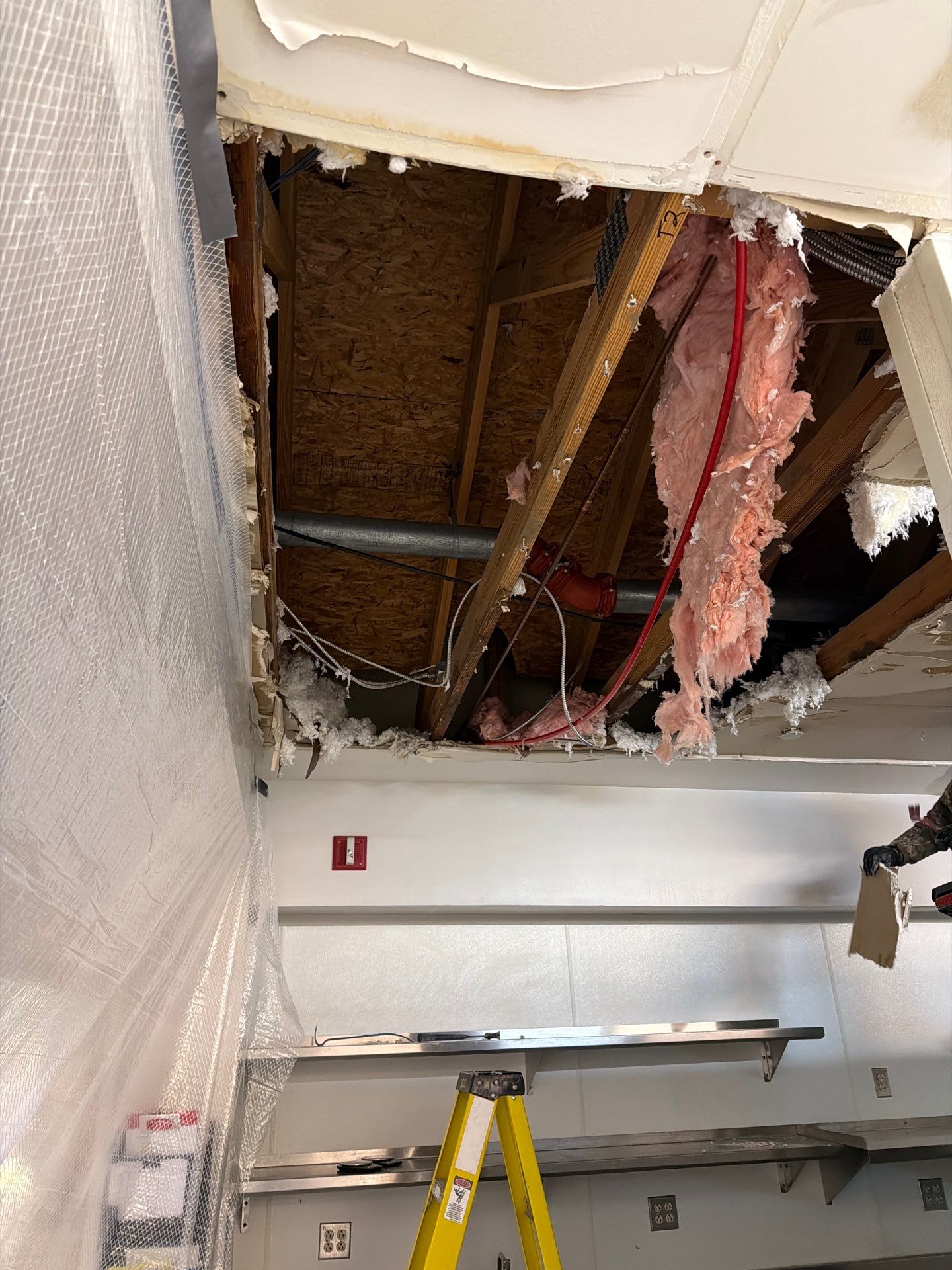
The ceiling drywall below was the easier call. Once you see a ring that defined, the paper backing is already compromised and the gypsum behind it has lost its bond. We cut a 4 by 4 foot section, bagged the wet insulation above, and ran air movers in the joist bay for three days. Reading came down from 32 percent to 14 percent by day two, and we closed the cavity once we hit baseline.
Job 4: The Laundry Wall That Bowed
One more worth noting. Townhome in Brookside, shared laundry wall with the neighbor. Homeowner said the drywall behind the dryer looked slightly bowed, no other symptoms. Pulled the washer out, found a slow drip from the hot supply hose where it met the valve. Wall cavity behind the washer was saturated, and the bottom plate had wicked moisture up the studs about 14 inches.
We opened the wall from floor to four feet, found mold colonization on the back of the drywall and on two stud faces. Containment went up before we cut anything else. This is the kind of job where rushing costs you. Cross contaminate the rest of the home and the scope triples. Brookside Water Restoration crew set negative air, ran HEPA filtration for the duration, and the homeowner stayed in the upstairs bedrooms while we worked the first floor.
Decisions We Make on Every Slow Leak Job
Every call looks different, but the decision tree stays the same. Before we set equipment, we want answers to a short list of questions.
- How long has the leak been active, based on staining, swelling, and odor intensity?
- Is the affected material structural, finish, or both?
- What is the moisture content at the perimeter of visible damage, two feet beyond the obvious wet zone?
- Is there active mold growth, and does it trigger an S520 remediation scope?
- Can we dry in place, or does the material need to come out to dry the cavity behind it?
- What does the insurance documentation need to look like for this specific claim?
- Are there hidden mechanical concerns (joist hangers, electrical, HVAC return paths) that the water touched on its way to where we found it?
Get those answers right and the scope writes itself. Get them wrong and you are back in three months tearing out cabinets that should have come out the first time.
Job 3: The Crawl Space Nobody Checked
Older ranch home, North Brookside Park (NOBO) area, homeowner noticed the kitchen floor felt cool in one spot. No staining, no smell upstairs. We pulled the crawl space hatch and the vapor barrier was holding standing water under the kitchen, maybe an inch and a half across roughly 80 square feet. Supply line union under the sink had been weeping for who knows how long, dripping straight down through a gap in the subfloor.
The upstairs looked fine because gravity pulled everything down. The damage was all under the house: rusted joist hangers, mold on the subfloor underside, and insulation that had to come out in bags. Our crew followed the protocol from our signs of hidden water damage field guide to map the affected zone before we cut anything.
What made this job memorable was the hangers. Two of them had rusted through enough that the joist was carrying load on friction alone. Homeowner had no idea. We braced the run, replaced six hangers, and pulled and replaced about 120 square feet of subfloor from below. The encapsulation crew came in after we finished drying and reset the vapor barrier with proper overlap and taped seams. Without that, the next humid summer would have undone everything.